Tuesday, November 13, 2018

November 13, 2018 My Community Unit


Image result for community helpers clipart

Our Community

This month we are learning about Our Community (the town of Franklin).  We started with Places In Our Community and now we are going to learn about People in Our Community.  

We start the lesson by talking about the vocabulary words for the week.  Vocabulary words this week include: doctor, firefighter, librarian, mail carrier, police officer,work, and workers.  We look at pictures and define the word.  I often use questions to facilitate words associated with the vocabulary word we are trying to define.  Then we try to connect the word to the children's lives.

For the activity, the children look at case files that contain clues to who the community helper is.  For example, if the answer is Police Officer, we turn over clues one at a time.  Clues include: police hat, police car, handcuffs.  Then the children guess who the community helper could be.


Miss Diane
Speech-Language Pathologist
Monday, November 5, 2018

November 5, 2018 - My Community Unit

My Community

This week we have started a new unit which focuses on Community.  This unit will include places, people, vehicles, and recycling.

The first unit we are talking about is places we go.  We  began the lesson by talking about the target vocabulary, which includes:
apartment, block, building, community,
firehouse/fire station, hospital, library and neighborhood.

For our activity, I made a map without buildings.  I then found real photos of buildings around the town of Franklin (library, post office, fire station, etc.) and printed them out.  We used the photos of the familiar buildings to place around the map.

 Each child had the opportunity to roll a large dice.  On the dice when clues to each building (i.e.: "This building in our community has books that we can read and borrow." - library;  "This building is where we go to learn.  It has teachers and students." - school/ECDC)


If the child was able to name the building/place, they found the picture and placed it on the map wherever they wanted.  If the child needed assistance, they were given a choice of 2 pictures, then placed it on the map.

Miss Diane
Speech-Language Pathologist


Friday, November 2, 2018

October 29, 2018 - My Familly

My Family

Related image

This week in language group, we finished up our unit on FAMILY.  We reviewed the vocabulary for the week, which included: tradition,, special, respect, alike, similar, and different.  For our activity everyone picked a picture of a person (boy/girl).  Each person looked different, but we sorted by what was similar.  Some of the characteristics we used were: bald, brown, hair, blonde hair, glasses, long hair, short hair.  Then we sorted ourselves by boy/girl, pants color, sneakers/boots, and glasses.  We focused on how we are alike.

Miss Diane
Speech-Language Pathologist

Monday, October 22, 2018

October 22, 2018 My Family Unit

My Family

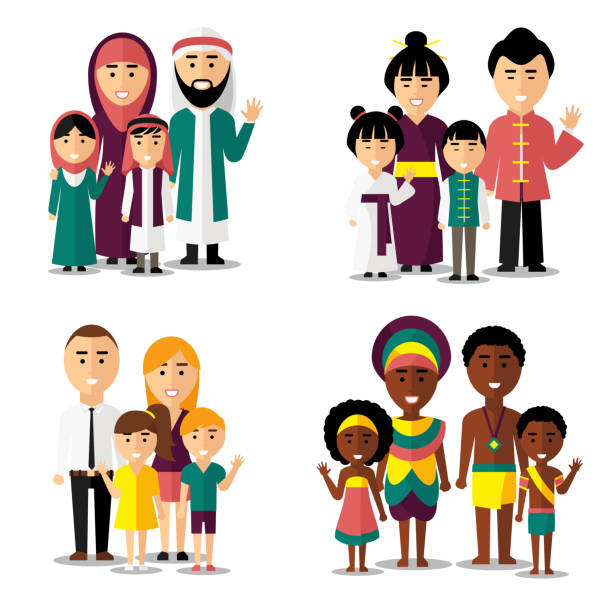
Image result for family clipart


This week in language group, we continued the unit on FAMILY!  We reviewed the vocabulary for the week, which included: celebrate, holiday, relatives, thinkful, and together.  We reviewed these vocabulary words by saying them, then defining them a a group.  I also asked questions to make it meaningful to them (i.e.:  Mom is your relative.  Am I your relative?).

We then looked at various pictures of celebrations (a wedding, St. Rocco's Feast, Christmas, Hanukkah, Kwanzaa, New Years Eve, and a birthday celebration).  We talked about about different things to celebrate and how to have a celebration.

For our activity, I printed out two rooms in a house, a kitchen and a living room.  The children made a scene of a celebration with the pictures provided.  The first child decided it was a birthday celebration for the sister.  Each child after that choose either a family member or a party item to place on the pictures.  At the end, all the  family members were at the party, which had decorations and a cake.

This activity worked on:
1.  vocabulary related to family (mother,, father, grandfather, grandmother, sister, brother, etc)
2.  vocabulary related to items used/needed at a party (balloons,  cake, candles, drinks, etc)
3.  location words (on the table, on the couch, at the stove)
4.  attending
5.  turn taking
6. labeling
7.  answering questions

Miss Diane
Speech-Language Pathologist

Monday, October 15, 2018

October 15, 2018 - My Family Unit

My Family

Related image

This week in language group we read the book "My Day From A to Z" by F. Isabel Campoy.  This book goes through the alphabet to describe what happends during a day.
"A - awake;  Good morning!  Are you awake?" asks mom.
B - bathroom;  I go to the bathroom to wash my face.
C - cereal;  I have cereal with fruit for breakfast."

For our activity, the children were presented with a picture of a house, with the rooms 
showing inside.


We looked at pictures of people performing various activities in the house and had to decide what room it went in.  For example, if a child picked the picture of the man cooking, he/she decided what room that a dad would cook in.  Other examples include: eating, taking a bath, watching tv, playing with toys, etc.

This activity worked on:
  1. attending to the book
  2. letters in the alphabet
  3. the names of rooms in a house (bedroom, kitchen, etc)
  4. vocabulary related to actions (cooking, washing, etc)
  5. labeling actions

Miss Diane

Speech-Language Pathologist

Wednesday, October 10, 2018

October 9, 2018 - My Family Unit

Image result for my family clipart

My Family


We started the My Family unit in Big Day for Pre-K!  In Language Group we read the book "Bear's Busy Family."  In this book a family prepares for a birthday by doing a variety of chores...

"Smell the bread my grandma bakes.
Touch the bowls my grandpa bakes.
Taste the fish my uncle brings..."

This book goes through each family member (grandma, grandpa, uncle, aunt, mommy, daddy, sister, brother, cousins, and baby) and how they helped to prepare for the party.

We talked about the vocabulary related to family members and who had each one (Who has a __?).

For our activity, we sorted family members by what they do.  A variety of family member pictures were given as a choice.  Each child chose one family member and had to decide what they do from a closed set of options (cooks dinner, washes clothes, showers, takes a bath, rinks milk and sleeps ina crib).

This activity worked on:
  1. vocabulary related to family.
  2. defining words
  3. attending to the book
  4. taking turns
  5. action vocabulary (cook, wash, etc.)
  6. 5 senses (smell, touch, see, hear, taste)
  7. identifying family members
  8. sorting

Miss Diane
Speech-Language Pathologist


Friday, February 9, 2018

Month of February

Franklin Community and Community Helpers

We started learning about our community (the town of Franklin) and about community helpers.
The following activities were presented over the month!

Activity #1

One activity was being a detective, looking at clues
figuring out who the community helper is.

We made Case Files that had clues in them to each Community helper.  We looked at each clue and made guesses along the way!


Activity #2

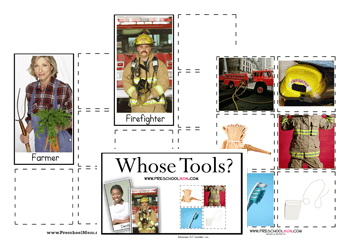
We read the book "Who Uses This?" by Margaret Miller.  One page showed an item then we made a guess as to who uses the item (i.e.: rolling pin - baker).

For our activity, we sorted items by the community helper that uses them.  Each child picked a card, labeled it and decided which community helper uses the tool.  For example, the firefighter uses a firetruck, hose, helmet and fire jacket.


Activity #3

We read the book "Clothesline Clues to the Jobs People do" by Deborah Hembrook and Kathryn Heling.


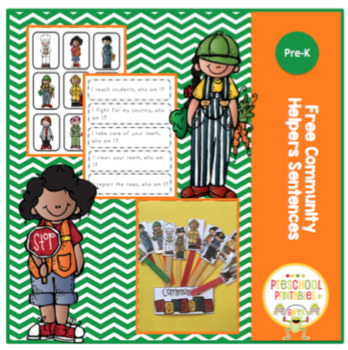
For our activity, each child was given a community helper taped to a Popsicle stick.  Clues were read and the child with the community helper being described held up their community helper.

Free Community Helpers Sentences


Acitivity #4

In small groups, the children were brought into the hallway where different mailboxes were hung on the wall for different community members (families, police dept, fire dept, etc.).  Each child was given 2 letters to deliver.  The Police Station address was a blue star, so their mailbox had a blue star and the address on the letter had a blue star.  To deliver the letter they had to 'match' the address (color/shape).  We talked about the different community helpers, as well as colors and shapes.

Displaying IMG_5718.JPG
Things you can do at home include:
1.  visit community helper sites
2.  talk about community helpers when you see them 
(what they drive, what they do, what they wear)
3.  pretend to be a community helper during play
(grocery store, fire fighter, police officer)
4.  play 'red light green light'


Miss Diane and Miss Linda

Speech-Language Pathologists


Friday, January 19, 2018

Month of January - Artic Theme

January Theme Unit
ARCTIC ANIMALS LANGUAGE LESSONS

For one of our language lessons, we printed out and laminated pictures of animals that live in the arctic
as well as a handful of pictures of animals that live on the farm or in the wild.   We then taped the pictures
on the walls of the school’s hallway.   Each child was given a sheet with illustrations of arctic animals
and directed to walk up and down the hall to find matches.   When they found a match, they had to name
it and circle it in crayon on their picture sheet.   Then we counted up how many arctic animals each
child had found.

For another language lesson, we printed out an illustration of a polar bear’s paw, laminated it, put some velcro
on it, and taped it to a large tongue depressor.   We then laminated a number of cardboard fish and attached
velcro to them as well.  Each child took a turn spinning a spinner numbered one through three to see how
many fish the polar bear needed to catch.  That child then used the paw to catch the correct number of fish.
 When done, the child passed the paw and spinner to the next child, saying “it’s your turn”.

A third language lesson involved using small figures of arctic animals set out in a line (ranging from 5
animals to 8 animals).   The children first labeled all the animals, then were told to close their eyes.   While
their eyes were closed, a white kitchen strainer that resembled an igloo was placed over one of the animals.
  When the children opened their eyes, they had to guess which animal was missing. The degree of difficulty
could be adapted for each child by decreasing or increasing the number of animals put out, or by hiding
two animals at once.

The above activities incorporated a number of language objectives including:
Following directions within a group
Taking turns
Speaking with peers (“it’s your turn”;  “here you go”)
Expressive labeling
Short term recall
Counting with one-to-one correspondence
Matching illustrations to pictures

Miss Diane and Miss Linda
Speech-Language Pathologists

Monday, December 18, 2017

December - Don & Audrey Wood


AUTHOR STUDY


This month we have been working on our unit on authors and illustrators with a focus on Don and Audrey Wood.

The books we have been using:   Red Ripe Strawberry and the Big Hungry Bear; The Napping House;  Piggies;  and Silly Sally.

The children will learn the definitions of “author” and “illustrator”, and that books are read from left to right.    Teachers will discuss the front and back covers, pages, and words on a page.  Children will be asked to look at the illustrations and describe what is happening, and predict what might happen next.

Language activities:  

For The Red Ripe Strawberry, we created seven different cards pictures from the book, and duplicated them. Children will receive a picture each, and then will try to find the peer who has their match. They will be asked to describe what the mouse might be feeling, as his emotions are very well illustrated in this book. The children can then use the cards to play a memory matching game.


For The Napping House,  we placed pictures of all the characters in the book on blocks.  As we read the book, we stacked the blocks.  In the end, we knocked the blocks down.  We counted the blocks, named each character, and talked about placing the block on and knocking then down.   We also worked on linguistic concepts as each character in the story becomes smaller than the previous on.   While stacking the blocks, we talked about putting on top, and asked who was under. We also used the pictures on the blocks and talked about big/small and bigger/smaller.


For Piggies we made a picture of two hands.  On the end of each finger is a piece of velcro to place piggies.  Each child picked a question/task card that had a question and picture choices.  If they answered correctly they picked a pig and placed on the end of one finger.  Some questions included, “Show me two piggies”; “Which piggie in not dirty?”;  Show me the piggie who is clean.”

Miss Linda and Miss Diane

Tuesday, November 14, 2017

Language Group - Week of November 13,2017

Family Theme

This week in Language Group, we read the book
"Are you my Mother?" by P.D. Eastman.  In this book a baby bird goes out to search for his mother.  He comes across other animals and some big objects.  After his search he makes it back to his nest and his mother comes home.

Image result for are you my mother

For our activity, one child was  chosen to be the baby bird.  The other children were given pictures of the animals and items in the book (i.e.: kitten, cow, airplane, boat).  One child was given the mother bird picture.  The Baby Bird walks up to a child and and asks “Are you my Mother?” the child answers “Yes” if they have the mother bird card or “No I am a ___” and fills in the ___ with their picture.

This activity worked on:
1.  attending to the story
2.  labeling pictures
3.  taking turns
4.  approaching other children
5.  asking a question
6.  answering yes/no questions

Activities you can do at home include:
1.  Ask your child yes/no questions about items in your home.
2.  encourage your child to ask questions and model the appropriate word order if needed.
3.  Click the link and print out an animal mother/baby matching.
4.  Play the same game we played at your house!

Miss Diane & Miss Linda


Tuesday, October 17, 2017

Language Group - Week of October 16, 2017


Farm
This week in Language Group the children went with the Speech-Language Pathologist in small groups to the hallway outside of their classrooms.  A variety of animals were tapped to the hallway wall, some were farm animals and some were not.  Each child was given a clipboard and a crayon to complete a checklist of farm animals that we saw on the wall.


The children helped each other find different animals on the wall that were the same animal on their check lists.  Some animals looked the same and some looked different (the cow pictures were different, black and white cow on the checklist and a brown and white cow on the wall).  We also went through the pictures and asked if it was a farm animal (i.e.: Does a whale live on the farm?).

Once we found all the farm animals, we counted how many each child found and wrote the number on the bottom of the checklist.


This activity worked on:
-vocabulary related to farm animals
-labeling animals
-following directions
-answering yes/no questions
-counting one to one correspondence


Things you can do at home include:

-sing farm songs "Old MacDonald"
-play with a farm animal set and label the animals
-ask your child yes/no questions

Miss Diane & Miss Linda


Tuesday, October 10, 2017

Language Group - Week of October 10, 2017

Farm

This week we are starting the Farm unit!
We began by the children sharing what they know about the FARM!
We asked the children, what is a farm?  What animals live on a farm?
What things happen on a farm?  Who works on a farm?
The children were encouraged to share their thoughts within the group.

We read the book "Barnyard Banter" by Denise Flemming


The book shows a variety of animals that are on a farm, along with their animal noises.  However, in the background of each page there is a goose chasing a butterfly.  The children looked for the goose on each page and on the last page the butterfly fly up high and got away.
Image result for barnyard banter
Some of the vocabulary we talked about included: pasture, hayloft, rafters, and grain.

For our activity, I placed a large picture of a barn with animals velcroed outside.  Each child was asked a question related to the topic.  Some examples include:  Do pigs gallop?  Does a dog lay eggs?  Do dogs say baaa?  Do we get wool from sheep?  Can dogs fly?

If the child answered the question correctly, they were able to place an animal in the barn.  If the answer was not correct, they placed a raindrop in the sky.  The object was to try and get all the animals in the barn so they did not get wet from the rain.

This activity worked on:
1.  attending to the book
2.  picture identification and animal sound identification
3.  vocabulary related to farm and farm animals
4.  answering yes/no and what questions
5.  answering informational questions about the farm

Things you can do at home include:
1.  sing 'Old MacDonald had a farm'
2.  try to go to  a farm
3.  try online farm games

http://www.sheppardsoftware.com/preschool/animals/farm/animalfarmgame.htm
*search for other online games!

Miss Diane and Miss Linda